Interlocutora invisível
Wednesday, 10 August 2011

Monday, 8 August 2011
Alice in researchland is thinking that...

... si on est né politique, on ne devient pas théorique.
The more I think and read about Novas Cartas, the more I'm convinced of this simple truth. I'm finishing an article about this (hence the blogger's silence) and will post it as soon as it's ripe.
Another silly reason for my long blogger's silence: I'm reading the at times hilarious, but feminism-rocks-kind-of-superfluous How to Be a Woman, by Caitlin Moran (above in a Neal Fox illustration). More about this soon too...
Monday, 13 June 2011
Website to set the wheels in motion
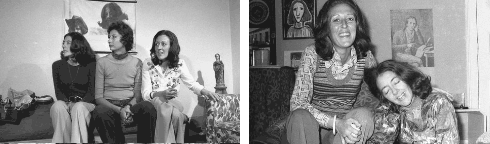
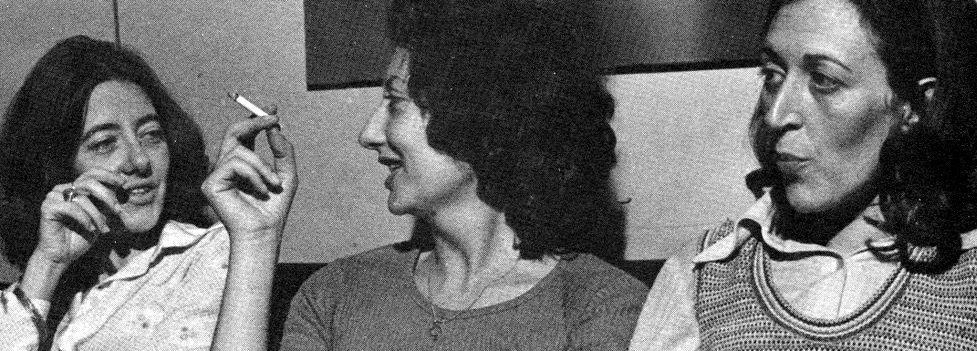
The project Novas Cartas Portuguesas 40 Anos Depois has a brand new website. Worth having a look!
http://www.novascartasnovas.com
"Este projecto tem por objectivo criar uma rede transcultural e internacional em torno do livro Novas Cartas Portuguesas, publicado em 1972 por Maria Isabel Barreno, Maria Teresa Horta e Maria Velho da Costa, dando conta da investigação desenvolvida em Portugal e em vários países ocidentais nos últimos quarenta anos em torno de Novas Cartas Portuguesas."
Friday, 10 June 2011

Tuesday, 7 June 2011
post that couldn't fit in a tweet

Setting:
porter's lodge of college @cam, closed for visitors due to top secret choir rehearsals inside
Characters:
Middle-aged male English porter
Young non-English woman
Dialogue:
Porter: Are you student or staff?
Woman: I'm staff.
Porter: Oh, kitchen staff... you may come in.
Saturday, 28 May 2011
untitled
"Encontrará o amor outra maneira senão esta: aquele que utiliza ou é utilizado. Aquele que devora ou é devorado; se finge devorado e por sua vez devora." (NCP, pp. 33)
Monday, 16 May 2011
Take this book and make it home

But what does it mean to take this book and make it home? What are the political consequences of claiming it as origin? If Novas Cartas brings with it the idea of “home”, and if home is that which is inherently different from an elsewhere, then the implicit connection between the book and one’s feminist identity ultimately reinforces the state of being tied to a specific location. In this case, the location is Lisbon, Portugal. I'm Portuguese, but I'm not from Lisbon. Lisbon is beautiful, with its famous light and charming eléctricos. People like Eugène Green make ravishing shots of the place, but Lisbon clearly isn't crossed by my hometown's ribeira. (Apparently that ribeira is stamped on my face, since old ladies in college dinners tend to ask condescendingly, so were is your village, my darling, once I tell them I'm from Portugal.) It gets more and more complicated, because I'm not from my hometown either. (I used to be, now I am and I'm not from there). Even if I were entirely from there, what a curious place to root my feminism. And yet, that ribeira stares at my feminism, day and night. Vem sentar-te comigo, ribeira, à beira do meu feminismo. Fiquemos assim, as duas, bucólicas e pensativas, a murar este ismo que um dia chegou de Lisboa. Underneath my goal to make the web of “clausuras” around the book implode lies a hidden desire to centralise, to find an origin, a specific geopolitical, temporal point, a stable, unchanging frame of reference pinning feminism down to a particular national ground (or local ribeira). My perception of the “book-as-root” ultimately signals an anxiety in relation to its status as “book-en-route”, in transit in and out of Portugal, into the world.
Thursday, 17 February 2011
Allegra writes like a girl

I just read an article in The Guardian that made me think of a paper I gave back in 2009. The paper addressed the way in which two women writers coming from both sides of the Lusophone postcolonial divide coexist within Lusophone literary studies, and it was one of the most provocative I ever wrote, eliciting some strong post-conference responses (which I took as evidence that I was indeed asking the right questions).
The women were Mozambican writer Paulina Chiziane and Portuguese writer Lidia Jorge. I was interested in approaching them comparatively, for although they are among the most successful women writers in the field, I sense that they are not popular in the same way. I drew on published reviews of both authors work which conclude that, as women writers, Chiziane and Jorge apparently lack the touch of Midas that will transform their books into literary gold. From this I inferred that gender concerns in women's writing continue to be viewed with suspicion, which leads to certain books being dismissed as if in need of "poda" in terms that, rather interestingly, cut across the postcolonial divide.
I’m still not sure if this is simply the way in which all writers, male and female, are read before they reach canonical status. More research would be needed here. But I think it’s got something to do with what particular books are about, and not simply with how they are written (the view suggested in the Guardian article). What they're about, together with where they come from and who writes them, influences how they're valued.
Friday, 28 January 2011
More Than 100 Million Women Are Missing -- Amartya Sen

"The numbers of “missing women” in relation to the numbers that could be expected if men and women received similar care in health, medicine, and nutrition, are remarkably large. A great many more than a hundred million women are simply not there because women are neglected compared with men. If this situation is to be corrected by political action and public policy, the reasons why there are so many “missing” women must first be better understood. We confront here what is clearly one of the more momentous, and neglected, problems facing the world today." (20 December 1990)
a great read by Amartya Sen, 1998 Nobel Prize winner
Friday, 21 January 2011
On pre-loved books
A most precious gift awaited me in the office this morning. Inside the envelope was the first Italian edition of Novas Cartas Portuguesas (Milano, Rizzole Editore, 1977, translated by Marina Valente, preface by Armanda Guidicci).
The dim yellow copertina morbida misspells “Velhoda Costa”, and exhibits the following sentence in red:
“I movimenti femministi d’Europa e d’America si sono riconosciuti in questo libro proibito sulla ‘clausura’ della donna”
I find the choice of "riconosciuti" interesting. I can't help myself and sniff at the use of donna in the singular. I feel fortunate as open it and read, for the first time, Prima Lettera I.
“Poiché tutta la letteratura non è che una lunga lettera a un interlocutore invisibile, presente, possible o futura passione che liquidiamo, alimentiamo o cerchiamo. E già si è detto che non conta tanto l’oggetto, che è un semplice pretesto, quanto la passione; e io aggiungo che non conta tanto la passione, che e un semplice pretesto, quant oil suo esercizio. Non sarà, quindi, necessario chiederci se ciò che ci unisce è la comune passione di esercizi diversi o l’esercizio comune di passioni diverse. Ci limiteremo a chiederci qual è la forma del nostro esercizio, se è la nostalgia o la vendetta. Si, senza dubbio, la nostalgia è anche una forma di vendetta e la vendetta una forma di nostalgia: in entrambi I casi cerchiamo qualcosa che ci risparmi la ritirata o ci evite la distruzione. Ma non per questo la passione smette di essere la forza e l’esercizio ciò che le da senso. Con la sola nostalgia faremo una sorellanza e un convento, suor Mariana dale cinque lettere. Con la sola vendetta faremo un ottobre, un maggio, un nuovo mese con cui coprire il calendario. E di noi stesse, cosa faremo?
1.3.71
The gift surprised me when I most needed it. As I place it next to my own 1998 Dom Quixote Portuguese version partially destroyed by the handwriting of some disillusioned Amazon seller, I think that Derrida was right. Nothing is more difficult than to accept a gift.
Grazie tante.
The dim yellow copertina morbida misspells “Velhoda Costa”, and exhibits the following sentence in red:
“I movimenti femministi d’Europa e d’America si sono riconosciuti in questo libro proibito sulla ‘clausura’ della donna”
I find the choice of "riconosciuti" interesting. I can't help myself and sniff at the use of donna in the singular. I feel fortunate as open it and read, for the first time, Prima Lettera I.
“Poiché tutta la letteratura non è che una lunga lettera a un interlocutore invisibile, presente, possible o futura passione che liquidiamo, alimentiamo o cerchiamo. E già si è detto che non conta tanto l’oggetto, che è un semplice pretesto, quanto la passione; e io aggiungo che non conta tanto la passione, che e un semplice pretesto, quant oil suo esercizio. Non sarà, quindi, necessario chiederci se ciò che ci unisce è la comune passione di esercizi diversi o l’esercizio comune di passioni diverse. Ci limiteremo a chiederci qual è la forma del nostro esercizio, se è la nostalgia o la vendetta. Si, senza dubbio, la nostalgia è anche una forma di vendetta e la vendetta una forma di nostalgia: in entrambi I casi cerchiamo qualcosa che ci risparmi la ritirata o ci evite la distruzione. Ma non per questo la passione smette di essere la forza e l’esercizio ciò che le da senso. Con la sola nostalgia faremo una sorellanza e un convento, suor Mariana dale cinque lettere. Con la sola vendetta faremo un ottobre, un maggio, un nuovo mese con cui coprire il calendario. E di noi stesse, cosa faremo?
1.3.71
The gift surprised me when I most needed it. As I place it next to my own 1998 Dom Quixote Portuguese version partially destroyed by the handwriting of some disillusioned Amazon seller, I think that Derrida was right. Nothing is more difficult than to accept a gift.
Grazie tante.
Subscribe to:
Posts (Atom)