Friday, 28 January 2011

More Than 100 Million Women Are Missing -- Amartya Sen


"The numbers of “missing women” in relation to the numbers that could be expected if men and women received similar care in health, medicine, and nutrition, are remarkably large. A great many more than a hundred million women are simply not there because women are neglected compared with men. If this situation is to be corrected by political action and public policy, the reasons why there are so many “missing” women must first be better understood. We confront here what is clearly one of the more momentous, and neglected, problems facing the world today." (20 December 1990)

a great read by Amartya Sen, 1998 Nobel Prize winner

Friday, 21 January 2011

On pre-loved books

A most precious gift awaited me in the office this morning. Inside the envelope was the first Italian edition of Novas Cartas Portuguesas (Milano, Rizzole Editore, 1977, translated by Marina Valente, preface by Armanda Guidicci).

The dim yellow copertina morbida misspells “Velhoda Costa”, and exhibits the following sentence in red:

“I movimenti femministi d’Europa e d’America si sono riconosciuti in questo libro proibito sulla ‘clausura’ della donna”

I find the choice of "riconosciuti" interesting. I can't help myself and sniff at the use of donna in the singular. I feel fortunate as open it and read, for the first time, Prima Lettera I.

Poiché tutta la letteratura non è che una lunga lettera a un interlocutore invisibile, presente, possible o futura passione che liquidiamo, alimentiamo o cerchiamo. E già si è detto che non conta tanto l’oggetto, che è un semplice pretesto, quanto la passione; e io aggiungo che non conta tanto la passione, che e un semplice pretesto, quant oil suo esercizio. Non sarà, quindi, necessario chiederci se ciò che ci unisce è la comune passione di esercizi diversi o l’esercizio comune di passioni diverse. Ci limiteremo a chiederci qual è la forma del nostro esercizio, se è la nostalgia o la vendetta. Si, senza dubbio, la nostalgia è anche una forma di vendetta e la vendetta una forma di nostalgia: in entrambi I casi cerchiamo qualcosa che ci risparmi la ritirata o ci evite la distruzione. Ma non per questo la passione smette di essere la forza e l’esercizio ciò che le da senso. Con la sola nostalgia faremo una sorellanza e un convento, suor Mariana dale cinque lettere. Con la sola vendetta faremo un ottobre, un maggio, un nuovo mese con cui coprire il calendario. E di noi stesse, cosa faremo?
1.3.71


The gift surprised me when I most needed it. As I place it next to my own 1998 Dom Quixote Portuguese version partially destroyed by the handwriting of some disillusioned Amazon seller, I think that Derrida was right. Nothing is more difficult than to accept a gift.

Grazie tante.

Tuesday, 11 January 2011

São Lima and São Tomé on "Pública" 09.01.11


"Diria que a agenda deste Governo parece não incluir a aceitação, e muito menos o encorajamento, de espaços de debate, de confronto de ideias, de exercício do contraditório, de acareação de perspectivas sobre as grandes áreas da cidadania, de interpelação, sobretudo dos governantes, sobre as suas opções e decisões." (pp. 46-51)

Thursday, 23 December 2010

on the beauty and civility of death

On the eve of the eve of a very canonical birth, i'd rather think about the gender of death.

"Because I could not stop for Death,
He kindly stopped for me;
The carriage held but just ourselves
And Immortality.

We slowly drove, he knew no haste,
And I had put away
My labor, and my leisure too,
For his civility."
(E. Dickinson)

---

"Wearing the new dress that she bought yesterday in a shop downtown, death goes to the concert. She is sitting alone in the box and, as she did during the rehearsal, she is looking at the cellist. Just before the lights went down, when the orchestra was waiting for the conductor to come, he noticed her. He wasn't the only musician to do so. Firstly because she was alone in the box, which, although not rare, wasn't that frequent an occurrence either. Secondly because she was pretty, possibly not the prettiest woman in the audience, but pretty in a very particular, indefinable way that couldn't be put into words, like a line of poetry whose ultimate meaning, if such a thing exists in a line of poetry, continuously escapes the translator."
(J. Saramago)

Sunday, 19 December 2010

Who's afraid of Conceição Lima?


"For it still remains politically essential for feminists to defend women as women, in order to counteract patriarchal oppression that precisely despises women as women" (Toril Moi, Sexual/Textual Politics, pp. 13)

When political and ideological oppression starts depriving women like São Lima of their freedom, of their job, and of their voice, then it's time to recall the moments when you were told in restaurants that there's no more need for feminism today, that oppression does not exist, because all around women are writing/producing/thriving. Although it matters that this is happening in São Tomé, it doesn't really matter. It could be Pakistan, England or Austria, for all we know. It's happening, open your eyes and write about it (or write your name down here).

And as you write about it from your own position of comfort, you should trim the guilt and think instead about what little difference your writing about it may produce. A little but real difference to someone - to you? - will make it worthwhile.

So it's really not about the tag, my dear (but) silly feminist princess. The women writers you insist on bringing together in your uni-multi-Khalo-brow-phd thesis refuse, as you know so well, to be called feminists. Hélène Cixous thought feminists were bourgeois little women running after power in the patriarchal system. Even that mother of mothers, Simone de Beauvoir, started by calling herself a socialist (while a certain Same called her a Beaver in bed). And yet, the symbolic value of their work for women - for you - is extraordinary.

(Suddenly, the implicit tag starts burning inside)
Sunday, 28 November 2010

the silly feminist princess

karingana ua karingana... there was a girl who wanted to know more about feminism, before deciding to tag herself as one. but the thin, delicate border between what she wanted to learn and what she was and perhaps would like to be(come) was systematically disregarded by those with whom she spoke about her desire to understand the concept. just wanting to know was enough to transform her into a bra-burning green f-frog, with semiaquatic hairy limbs for leaping. In a cutting edge 2010 snow-white British fairytale, she rebelled against the prince, Mr. DesireToKnow, (a Hungarian version of the French Chevalier) and decided to refuse the promise of his kiss. she remained a princess for ever and ever and never won a post-doc scholarship in her life, blaming it all on the crisis.

famously pessimistic


pessimistic nation indeed... everytime i call home, i'm offered a list of people who died during the week.

Wednesday, 24 November 2010

Lá fora o eco de "Novas Cartas Portuguesas" foi enorme


Finalmente, aqui fica o artigo do Ipsilon sobre o impacto internacional das Novas Cartas Portuguesas. Querida Raquel, parabéns pelo trabalho!

Saturday, 20 November 2010

drinking to forget (in cambridge and lisbon)


I briefly met someone yesterday evening who supported Britain’s decision to look for the famous weapons of mass destruction, as a diplomat in Washington. He looked weary, with his glass of white wine in one hand, and his wife in the other. He kept saying he took full responsibility. It was, i guess, his way of saying game over. But ending the game is not easy. This morning our former British diplomat will click on the newspaper link and read about "the 100th British serviceman" to die this year in Afghanistan.

"Serviceman"... I recently learned that in America soldiers are defined as "aid workers".

Reading the Portuguese newspaper is also fascinating these days - it gives you the feeling that we should all stop worrying and love the shield. Which, trocado por miúdos, could mean many things, namely: we should all stop worrying and love yet another document signed by the big guys in... Lisbon.

Friday, 12 November 2010

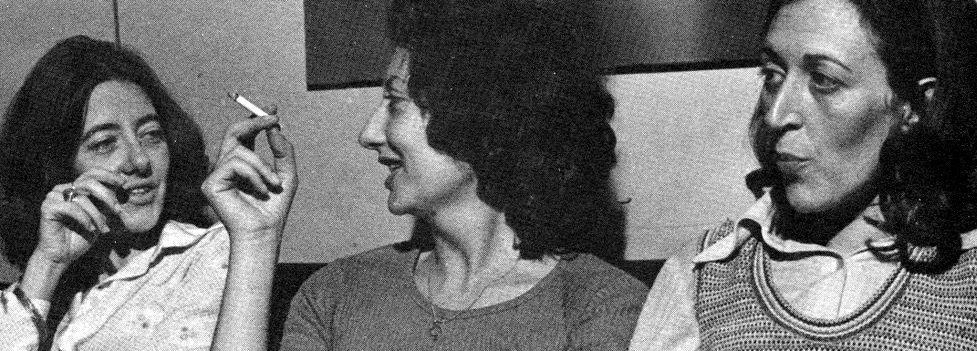
The return of Novas Cartas Portuguesas


Ípsilon, the literary supplement of Portuguese newspaper Público, is out this week celebrating the launch of the (much needed, much awaited) new annotated edition of Novas Cartas Portuguesas, organised by Ana Luísa Amaral. It includes a number of interviews and articles on the Three Marias, Quem me dera um quiosque...